
One afternoon during the Olympics this summer, my wife texted me. “You are missing some AMAZING races.” Amazing was in all caps. That evening, after the kids went to bed, we watched those “AMAZING” races together.
Ever since, one of those races has played back in my head many times.
I don’t go crazy about the Olympics, but I do enjoy watching some of the events. This summer, I found the running competitions particularly compelling. They feel so pure… like just a raw display of speed.
Like many others, I knew nothing about the international running scene before the Olympics. I didn’t know the names of any runners. I was so out of the loop that I asked my wife if Usain Bolt would be running this summer. Turns out he retired seven years ago.
As we began to watch Olympic races, we quickly started to learn who’s who. We were blown away when Noah Lyles snatched the gold in the 100 meters. We cheered as Sydney McLaughlin-Levrone set a world record while taking the gold in the 400-meter hurdles.
But nothing seemed to match the drama leading up to the men’s 1500 meters—one of those “AMAZING” races my wife wanted me to see. Ahead of the race, the 1500 meters was shaping up to be a show-down between two men: Jakob Ingebrigtsen and Josh Kerr.
Jakob Ingebrigtsen is a phenomenal athlete. At sixteen years old, he became the youngest athlete ever to run a mile in less than four minutes. Since then, he’s continued to break record after record, including the world records in multiple middle-distance running events. Many people consider him to be the top middle-distance athlete in the world.
But a British runner named Josh Kerr has been giving Ingebrigtsen a run for his money. At the Olympics in Tokyo in 2021, Ingebrigtsen predictably took the gold. A Kenyan runner named Timothy Cheruiyot took the silver, but rising star Josh Kerr won the bronze.
Since then, Kerr’s star has continued to rise. In August of 2023, he made a name for himself by defeating Ingebrigtsen and winning gold in the 1500 meters at the World Athletics Championships in Budapest.
When Kerr upset Ingebrigtsen in that race, a bitter rivalry began. Ingebrigtsen immediately dismissed Kerr’s victory, saying he only lost to Kerr because he wasn’t feeling 100%.
Kerr shot back, saying that Ingebrigtsen’s excuses were just a result of his insecurity.
When asked later in the Championships in Budapest if he was looking forward to racing Kerr again later that year, Ingebrigtsen said “no, he was just the next guy”.
Just the next guy.
The media seized on the rivalry and did their best to play the two runners off each other. On a podcast in November of 2023, Kerr criticized Ingebrigtsen, saying, “I just think he’s a really big attention seeker”.
In a TV interview, Ingebrigtsen commented on Kerr’s performance in a two-mile run in the UK, saying “I would have beaten him in that race, blindfolded”.
It’s no wonder that on August 6th, the day of the 1500-meter Olympic final, all eyes are on two runners: Ingebrigtsen and Kerr. Both men project confidence that they will beat the other and take home Olympic gold.
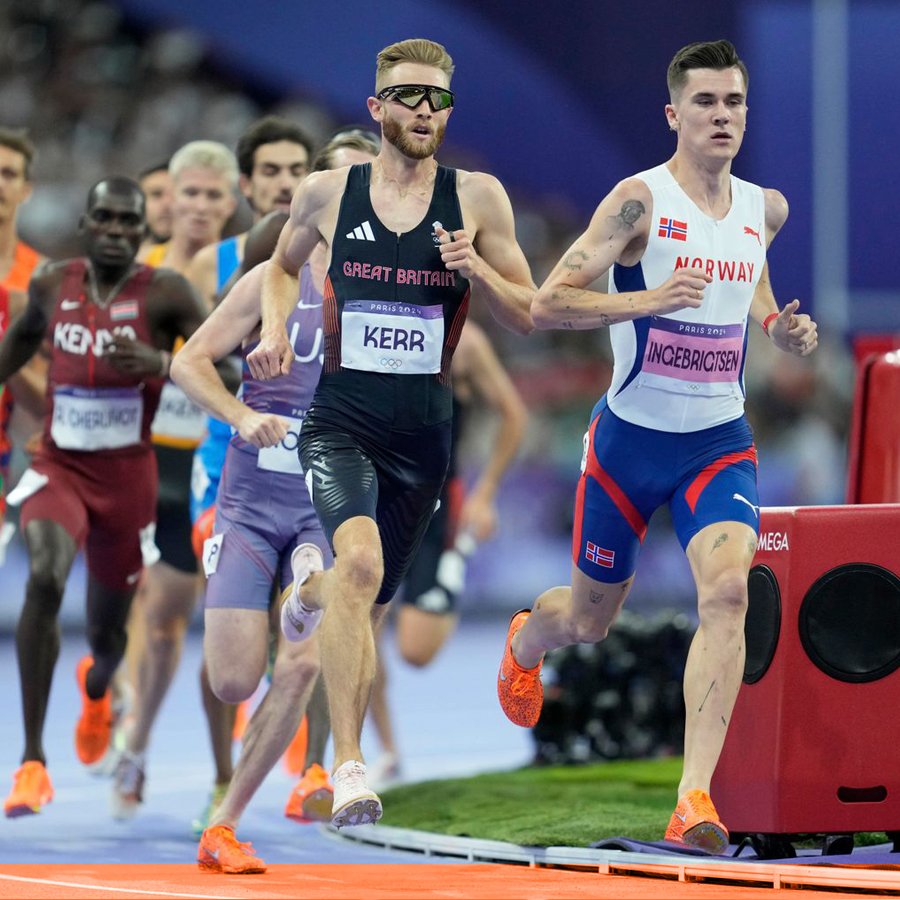
When the starting pistol fires, Ingebrigtsen quickly signals that he is leaving nothing to chance. He takes an early and convincing lead, an unusual move for him and a move that is no-doubt meant as a slap in the face to Josh Kerr, who has criticized Ingebrigtsen for depending on other runners to set the pace at the beginning of his races.
After only fifteen seconds of running, Ingebrigtsen is leading the pack. Josh Kerr is not far behind, but he’s also surrounded by other runners, two from Kenya, two from the United States.
Oh, I almost forgot to mention, there are three US athletes in the race. At thirty second in, Americans Hobbs Kessler and Yared Nuguse are right behind Josh Kerr, looking like, if they stick with it, they might be able to nab bronze. Meanwhile, Indiana native Cole Hocker is trailing, with seven competitors between him and Ingebrigtsen.
At one minute in, Ingebrigtsen is still in the lead. Most everyone else is in the same position, though Hocker has moved up to join his fellow American athletes who are still trailing the leaders.
At a minute and a half, it’s still the same. Ingebrigtsen leads the way, Kenyan runner Brian Komen is right behind him in second, Josh Kerr is in third.
Two minutes in, Ingebrigtsen has lengthened his lead slightly. Some of the runners start to separate as they struggle to maintain the punishing pace. Komen drops back, unable to keep up with Ingebrigtsen and the other leaders. The other Kenyan runner Timothy Cheruiyot takes his place. All three Americans are right behind Josh Kerr.
The pace they are maintaining is on par with the world record as they begin the last lap, the final 400 meters.
As they hit the three minute mark, things start to happen. Cheruiyot slows, losing his position behind Ingebrigtsen. Hocker speeds up, putting him third behind the two front-runners. Kerr makes a move on the outside, trying to pass Ingebrigtsen. For a few seconds, they’re neck-in-neck.
Ingebrigtsen feels the pressure from Kerr, he pushes towards Kerr, trying to nudge him even further to the outside, trying desperately to keep his number one rival from passing him.
But Ingebrigtsen seems unaware that as Kerr moves to pass him on the outside, the American runner Cole Hocker is in a perfect position to pass him on the inside. It all happens in a matter of seconds. At almost the same moment, runners pass Ingebrigtsen on both sides, the American on his left, the Brit on his right. Then Yared Nuguse passes him as well.
In the last three seconds of the race, it is Hocker, Kerr, and Nuguse who battle for the gold. In a stunning upset, Cole Hocker passes Kerr and sets a new Olympic record as he takes the gold. Kerr barely beats Nuguse across the finish line, leaving the previous Olympic champion, Jakob Ingebrigtsen, in fourth place.
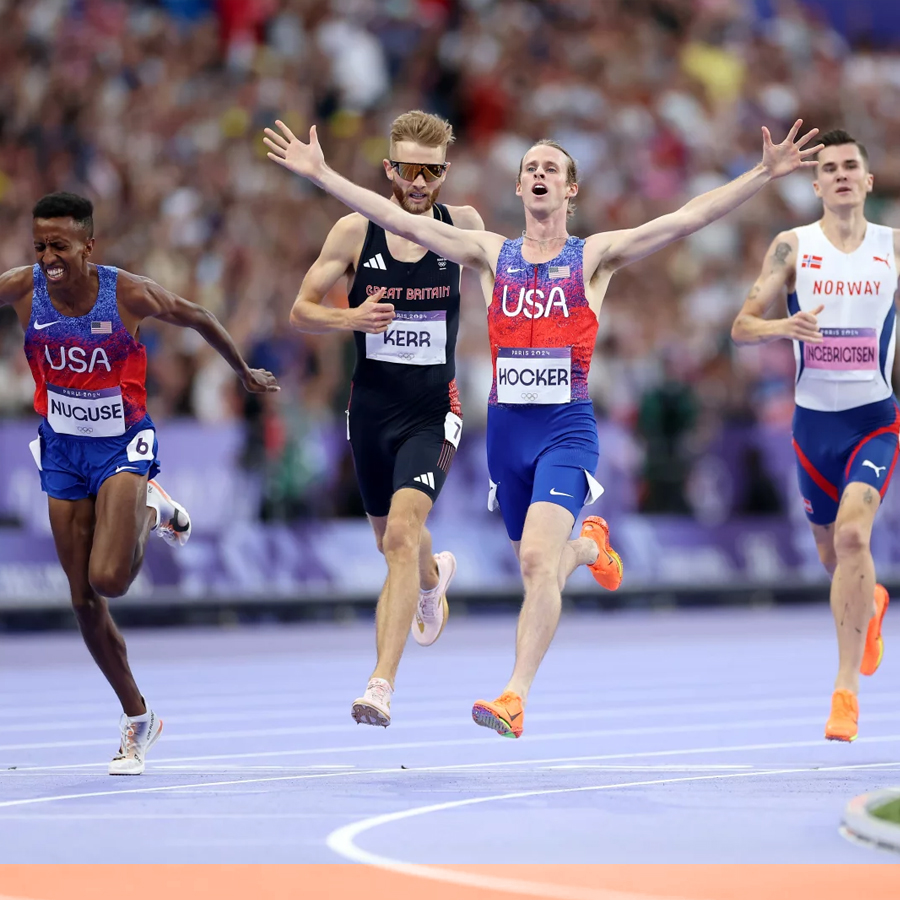
It’s not the race anyone expected and the running world is stunned as Jakob Ingebrigtsen walks away from the 1500 meters without a medal.
In John 21, Jesus meets His disciples on the beach by the Sea of Galilee and shares a meal with them. This is the third time the disciples have seen Jesus after His resurrection and He has important words to share with them, especially with Simon Peter.
In a well-known exchange, Jesus challenges Peter about His love.
“Simon, son of Jonas, lovest thou me more than these?”
“Yea, Lord; thou knowest that I love thee.”
“Feed my lambs.”
“Simon, son of Jonas, lovest thou me?”
“Yea, Lord; thou knowest that I love thee.”
“Feed my sheep.”
“Simon, son of Jonas, lovest thou me?”
“Lord, thou knowest all things; thou knowest that I love thee.”
“Feed my sheep.” (John 21:15-17)
Jesus goes on to explain to Peter that the day is coming when, as an old man, Peter will be made captive to the will of others, made to go where he does not want to go. Jesus is hinting at the fact that Peter will become a prisoner and will meet an untimely death because of his commitment to Christ.
For once, Peter seems uncomfortable in the spotlight. He doesn’t seem to like how Jesus is focusing all the attention on him and how his life will play out. So Peter points at John and asks Jesus, “Lord, and what shall this man do?”
“If I will that he tarry till I come, what is that to thee? follow thou me.” (John 21:22)
It’s as if Jesus is telling Peter, Run your own race. Love me, follow me, stay true to the end. Run your hardest and fastest. Be faithful as you feed my sheep, but leave John’s race to John.
“Follow thou me.”
I don’t know for sure, but it seems to me that in the Olympic 1500 meters, the media was so focused on Jakob Ingebrigtsen and Josh Kerr and the two runners were so focused on each other, that they almost forgot there were other contestants in the race. There was so much focus on a rivalry between two runners that another runner, another stellar athlete, shocked everyone by passing both of them.
Watching Ingebrigtsen run, it felt like he was running for Kerr. He set an early lead to convince Kerr that he could set his own pace. He kept his focus on Kerr as Kerr tried to pass him and when Kerr succeeded in passing Ingebrigtsen in the final paces of the race, it seemed like something broke, Ingebrigtsen suddenly had no more to give.
It may be that Ingebrigtsen lost his race because he was too focused on another competitor. If so, he wouldn’t be the first to make that mistake.
Back in 1954, at a one-mile run in Vancouver, Australian John Landy turned his head in the final straightaway to see how long his lead was over English runner Roger Bannister. As Landy turned to look towards the inside of the track, Bannister passed him on the outside. That look over his shoulder slowed Landy down enough and gave Bannister enough encouragement that Bannister went on to take the gold.
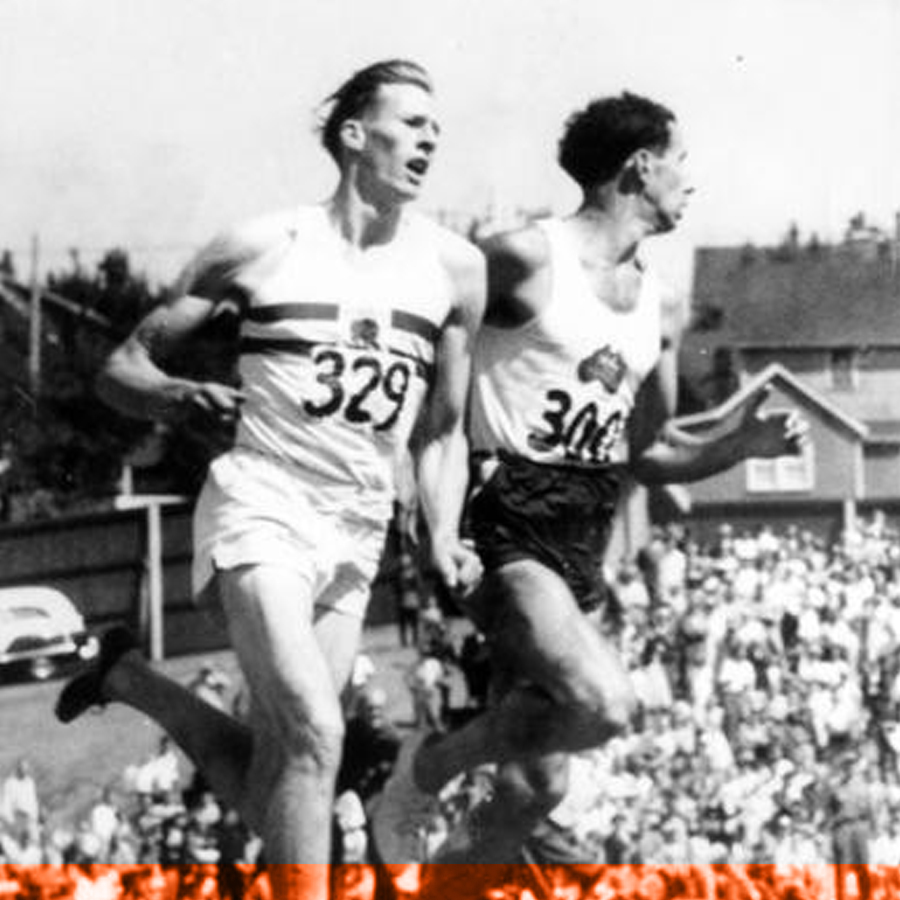
That moment, when Landy looked over his shoulder, has become iconic and it has served as a cautionary tale to all runners not to be too focused on another runner’s race, but to run their own.
In 1 Corinthians 9, Paul challenges Christians by saying, “Know ye not that they which run in a race run all, but one receiveth the prize? So run, that ye may obtain.” (1 Corinthians 9:24)
Give it your all, run with all your might, don’t hold anything back! But the prize we are running for is different from an Olympic medal. Paul says, “Now they do it to obtain a corruptible crown; but we an incorruptible.” (1 Corinthians 9:25)
The reward we anticipate is not based on beating someone else, managing to do it a little better than they do. Our prize is the favor of God, His pleasure when He looks at our lives and says, You trusted me. You did your best. You stayed faithful. You ran your own race, and you did it well. Well done.
None of us know what will happen to the others that surround us. We can look around and see those who seem to be so much farther along than we are, those who seem to have accomplished so much more for God.
But what is that to you? Don’t look around you. Look forward. “Press toward the mark for the prize of the high calling of God in Christ Jesus.” (Philippians 3:14) Run your own race.
“Follow thou me.”
Learn More
Watch the men’s 1500-meter final at the 2024 Olympics (YouTube)
Read about the rivalry between Ingebrigtsen and Kerr (ESPN, Mirror)
Read the account of Bannister’s 1954 defeat of Landy (Inside the Games)
 Exempla