
J. Edgar Hoover’s face is grim as he braces himself for his next meeting. He knows all about the despicable man about to enter the office and he’s fully prepared to put him in his place.
Dušan, or Duško as he is known, is a spy. And he’s not just any spy. Duško Popov is a double agent.
Popov was born in Austria-Hungary in 1912 and he watched in horror as the Nazis occupied his homeland. He hated the Nazis, so when the opportunity arose for Popov to become part of the German spy network, he jumped at the opportunity, quickly getting himself recruited as a counter-spy with the British intelligence agency MI6.
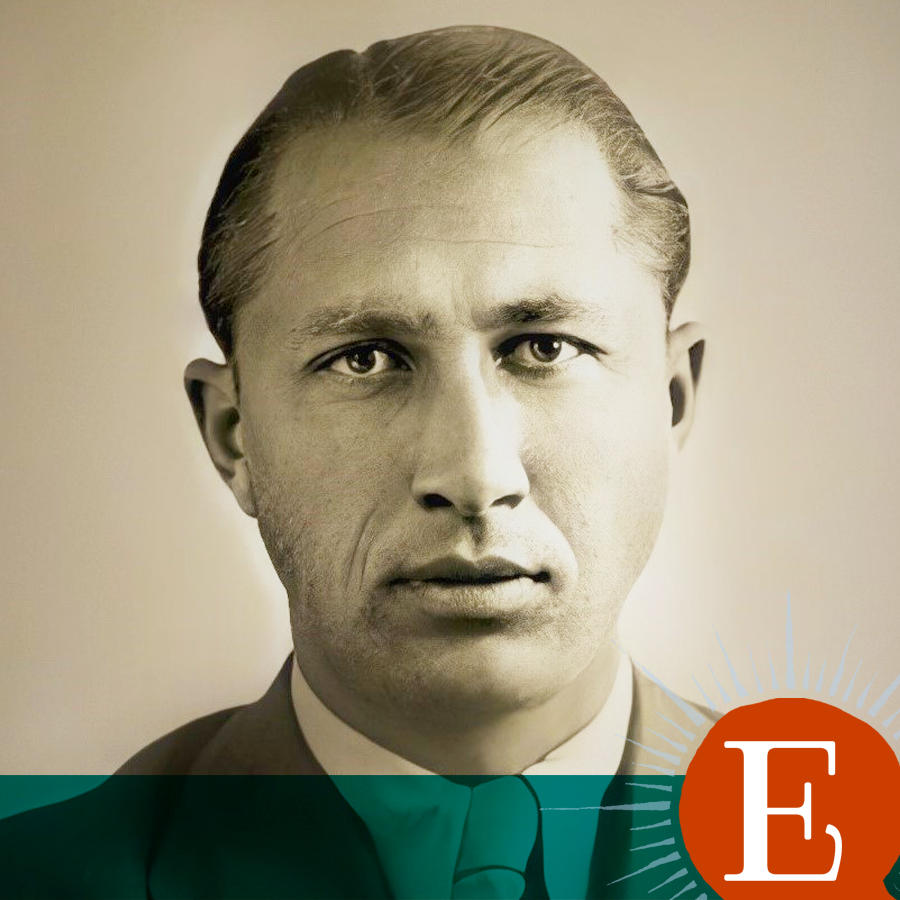
Popov was good at his job. He knew how to keep a level head in high-pressure situations and he proved himself deeply valuable to the British while pulling the wool over the eyes of the Germans. Among other things, Popov managed to convince the Germans that the D-Day invasion would be, not at Normandy, but at Calais further to the east.
Popov was not just known for his skill as a spy. He was also famous for his lifestyle. Popov grew up in a rich family and he never lost his taste for the finer things in life. He was known for his indulgence, his expensive taste, and his pursuit of women.
He played it all off as part of his act and most people were willing to dismiss his vices, but others were less forgiving of Popov’s immoral reputation.
It’s the summer of 1941. Popov is in Europe, meeting with his German counterpart. He’s peering through a microscope in disbelief. There, under intense magnification, he can read an entire document. But the whole document has been shrunk to such a minuscule size that it is concealed on a dot smaller than the head of a pin. It’s a new tool the Germans have developed and it allows vast amounts of information to be transported without detection. Popov will be carrying one such document to the United States. It’s a list of questions that he will seek to answer for the Germans.
One whole page of the document is filled with questions about Hawaii. There are detailed questions about where American ships are docked, and where ammo dumps and air fields are located. Popov is to report back with a detailed plan of Pearl Harbor. And the Germans want the information quickly.

Popov is smart enough to realize that this information is not for the Germans but for their Japanese allies. They can only want such detailed information for one reason. The Japanese are planning an attack on Pearl Harbor.
Popov reaches out to MI6 with the information, and they put him in touch with the FBI so he can warn them of the impending attack. Popov has also been tasked with establishing a new German spy ring in the US and he wants to coordinate with US intelligence so that the Americans can control what information makes it back to Germany.
The way Popov sees it, he’s doing the Americans a big favor. He expects a warm and grateful welcome, but instead, he is met with coldness and disregard.
Popov arrives in New York and passes on his information, expecting to begin work immediately as an ally of the FBI. But Popov waits weeks before he finally gets an audience with FBI director J. Edgar Hoover. Popov is impatient and Hoover is unimpressed. He knows all about Popov’s loose lifestyle and he’s naturally suspicious of anyone who serves as a double agent.
As Popov tells it, their exchange in the fall of 1941 is blunt and cold.
Popov enters the office where Hoover sits behind a desk.
His greeting is curt. “Sit down, Popov.”
Popov obliges without a word.
“I’m running the cleanest police organization in the world. You come here from nowhere and within six weeks install yourself in a Park Avenue penthouse, chase film stars, break a serious law, and try to corrupt my officers. I’m telling you right now I won’t stand for it.”
Popov counters, “I did not come to the United States to break the law or to corrupt your organization. I came here to help with the war effort. I brought a serious warning indicating exactly where, when, how, and by whom your country is going to be attacked. I brought to you on a silver platter the newest and most dangerous intelligence weapon designed by the enemy… But mainly, I came to help organize an enemy agent system in your country, which would be under your control and your orders. I think that is quite a lot to start with.”
Popov, knowing that the Germans are growing impatient with his lack of progress, pleads with Hoover for information to feed back to the Germans so they won’t grow suspicious.
“You’re like all double agents. You’re begging for information to sell to your German friends so you can make a lot of money and be a playboy.”
“I’m not a spy who turned playboy. I’m a man who always lived well who happened to become a spy. The Germans believe, as you do, that I work for them for opportunistic motives. They expect me to live the way I always have, and if just to please you I accept a lower standard, they’ll become suspicious…
“As for the information you say I’m begging from you, the object is obvious. You cannot expect a crop if you don’t put in the seed. You cannot deceive the enemy if you don’t…”
Hoover turns to the New York FBI chief, whose office he has commandeered for the meeting, “That man is trying to teach me my job.”
“I don’t think anyone could teach you anything.”
And so the interview is over. Popov expected great things through collaboration with the FBI, but the FBI director has stonewalled him, refused his offers for a partnership, and downplayed the importance of his information. Popov considers his time in the US to be almost entirely fruitless and he can’t seem to understand why Hoover won’t listen to him.
On December 7, 1941, Popov’s warning proves disastrously true when hundreds of Japanese aircraft buzz over Pearl Harbor, wreaking infamous havoc on the US naval installation and catapulting the United States into World War II.

I have a great deal of sympathy for J. Edgar Hoover’s disdain for Duško Popov. Popov was a vulgar man and his lifestyle was reprehensible. It seems fair that Hoover was turned off. But it’s hard not to wonder what might have been different if Hoover had taken seriously a despicable double agent’s warning about an impending attack on Pearl Harbor.
King Ahab is preparing for battle with Syria to regain the Israelite city Ramothgilead. The king of the nation to Ahab’s south, King Jehoshaphat, has agreed to join him in battle… on one condition. Jehoshaphat wants to know what God has to say about the battle.
So Ahab calls four hundred of his favorite prophets and they all start to tell the king enthusiastically that he ought to go up to the battle “for the Lord shall deliver it into the hand of the king.” (1 Kings 22:6)
Jehoshaphat isn’t convinced. He can tell these are Ahab’s yes men.
So he asks, “Is there not here a prophet of the LORD besides, that we might enquire of him?” (1 Kings 22:7)
Ahab is sheepish. “There is yet one man, Micaiah the son of Imlah, by whom we may enquire of the LORD: but I hate him; for he doth not prophesy good concerning me, but evil.” (1 Kings 22:8)
Jehoshaphat convinces Ahab to call this troublesome prophet. And Micaiah proves Ahab true. His prophecy is very negative. He tells the kings, “I saw all Israel scattered upon the hills, as sheep that have not a shepherd: and the LORD said, These have no master: let them return every man to his house in peace.” (1 Kings 22:7)
Exasperated, Ahab tells Jehoshaphat,
“Did I not tell thee that he would prophesy no good concerning me, but evil?” (1 Kings 22:18)
Micaiah is duly rewarded for his honesty by being thrown in prison. And, despite Micaiah’s warning, Ahab and Jehoshaphat go to battle against the Syrians.
As the sun sets on the field of battle, Ahab dies from his wounds, and the soldiers of Israel disperse to their homes. The leader is dead and the sheep are scattered. It’s almost like Micaiah knew what he was talking about.
It matters who we listen to. There are certain people who shouldn’t have your ear. If someone’s life is full of sin, we ought to be skeptical of their advice. If they have proved themselves to be unreliable or unfaithful to God’s Word, it’s dangerous for us to listen to them too closely. But there are times when we can get so focused on the messenger that we don’t take time to consider the message.
Sometimes, the truth comes from unexpected places and unexpected people. There are times when people you don’t like are going to tell you the truth. We might not like somebody because of their lifestyle, or because we don’t agree with everything they believe, or simply because they make us feel uncomfortable.
Paul says something really interesting in Philippians 1. He says that as a result of his being imprisoned, there has been an increase in those who are boldly declaring the word of God.
He says, “Some indeed preach Christ even of envy and strife; and some also of good will: The one preach Christ of contention, not sincerely, supposing to add affliction to my bonds: But the other of love, knowing that I am set for the defence of the gospel.” (Philippians 1:15-17)
There are those who are preaching the truth in love, stepping up to the plate in Paul’s absence. But there are also others who are preaching the truth to try to make Paul jealous. What is Paul’s take?
“What then? notwithstanding, every way, whether in pretence, or in truth, Christ is preached; and I therein do rejoice, yea, and will rejoice.” (Philippians 1:18)
The truth is being preached. Paul knows that, in this case, some of the messengers of the truth have some serious problems, but he is still willing to rejoice that they are sharing the true message.
It’s always interesting to me when people start talking about their favorite preachers and teachers. We gravitate towards different things. Some people like a preacher who is loud and demonstrative. Others like a preacher who is calm and cerebral. We all find it easier to listen to some people than to others.
But just because someone isn’t my favorite doesn’t mean I don’t have some important lessons to learn from them. I may have some objections, maybe even some objections that seem to have some weight, like Hoover objecting to Popov because of his sinful lifestyle or Ahab objecting to Micaiah because he seemed so negative all the time. In both cases, those men were wrong to dismiss the message just because of the personality of the messenger.
We can be distracted by bad grammar, poor delivery, annoying habits, abrasive personality, questionable ministry philosophy, and a hundred other things and miss the nugget of truth someone has to share with us.
We need to be careful and discerning, but we ought to recognize that God’s messengers come in lots of varieties. All of us who seek to share God’s message with others can be distracting. When I share God’s truth, I hope that others will be able to look past me and my imperfections to the truth of the message I declare.
I need to be gracious enough to do the same for others.
Learn more about Duško Popov
By reading his autobiography Spy/Counterspy
Or by reading this article (historyonthenet.com)
 Exempla