
There are tears in his eyes, but Ole Kirk Christiansen is not giving an inch. The Danish man is certain that his company is ready to undertake a building project that will cost 350,000 kroner.
His son, Godtfred, is not convinced. The sum, equivalent to over $350,000 dollars in today’s economy, is far beyond the company’s means. But when Godtfred voices his opposition, recommending something more affordable, his father’s response is straight-forward but biting.
“I’m the one who decides what we build here, and your job is to find the money!”
Godtfred’s mind is made up. No longer will he be the Junior Managing Director. No longer will he answer to his father. His days at the LEGO toy factory are over.
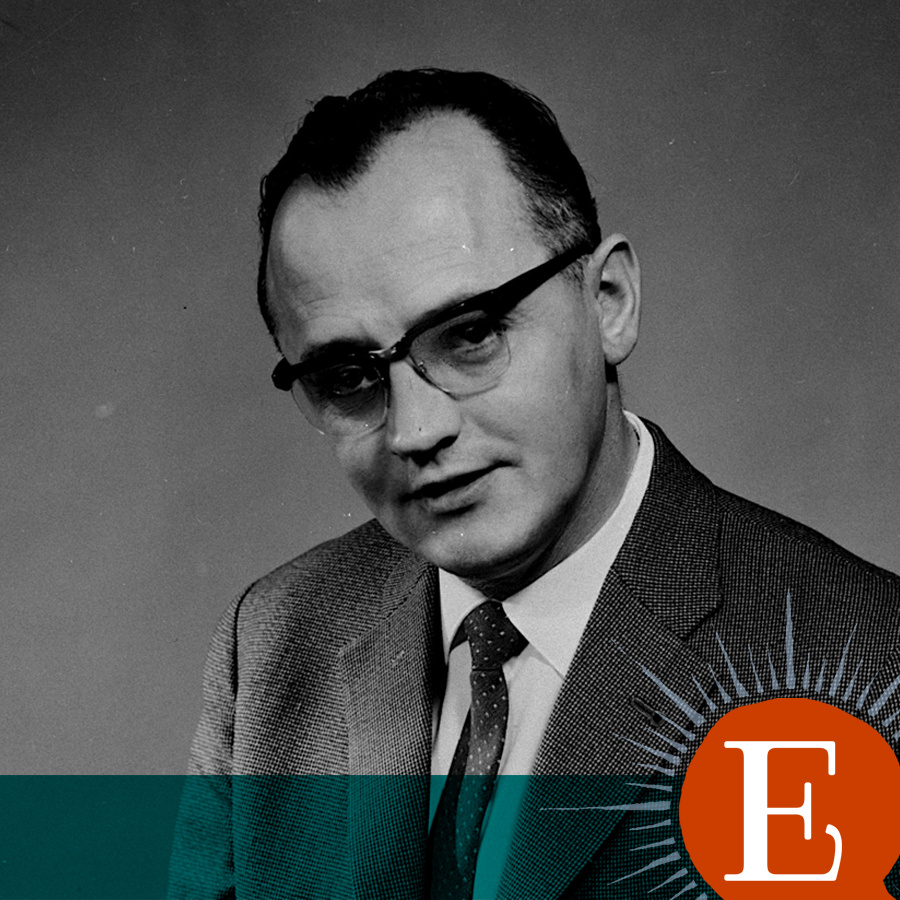
A week later, Godtfred has had time to cool off. He returns to LEGO and resumes his position as Junior Director, but he warns his father, “We’re relying on your faith now, not mine.”
Father and son have long had a difficult business relationship. Ole is always innovating, looking for—and spending money on—new ideas. Looking at the books, Godtfred is unimpressed by the vast sums his father spends on his apparently hare-brained ideas. Lately, Ole had become obsessed with plastic toys. He is convinced that the future of toys is in plastic.
Someone has given Ole some plastic blocks from England and he is determined that LEGO will make something similar and sell it in Denmark. Godtfred thinks it’s all a waste of time… and money.
Again and again, he finds himself arguing with his father, who blithely spends on new ideas with no apparent sense of their existing financial obligations. Convinced that their forays into plastic brick-building will end in bankruptcy, Godtfred persuades his brothers to join him in cornering their father and pressuring him to stop the “plastics nonsense”.
His father’s response is maddening. “Don’t you have enough faith, boys? I have prayed to God, and I believe in these bricks!”
Godtfred does not believe in these bricks.
One day, while giving a tour of the LEGO factory, Godtfred tells a journalist,
“If people took the trouble to investigate the plastics market, they would discover that most of the time it breaks after the children have been playing with it for a day… What’s happened is simply that the use of plastics has spun out of control. You can produce useful and handy things out of plastic, but wood is just more solid.”
As far as Godtfred is concerned, plastic is a fad that will soon pass. A look at LEGO’s sales numbers seems to support Godtfred. The little plastic bricks simply do not sell very well. Ole persists, but as the old man’s health begins to fail, Godtfred finds himself assuming more and more responsibility in the company and he is forced to think seriously about LEGO’s future.

Godtfred realizes that with his father’s large building project in the works, the company needs to take a big step forward. They need a toy that will be more than a single toy. Godtfred envisions a toy that LEGO can produce around which the company can build an entire system of play.
In 1952, Godtfred swallows his pride and allows himself to recognize the potential of those little plastic bricks he despised so much. Godtfred gives them a makeover. Instead of the awkward name “Automatic Binding Bricks”, they became “LEGO Bricks”. Updated packaging sports a photo of Godtfred’s own children building with the blocks.
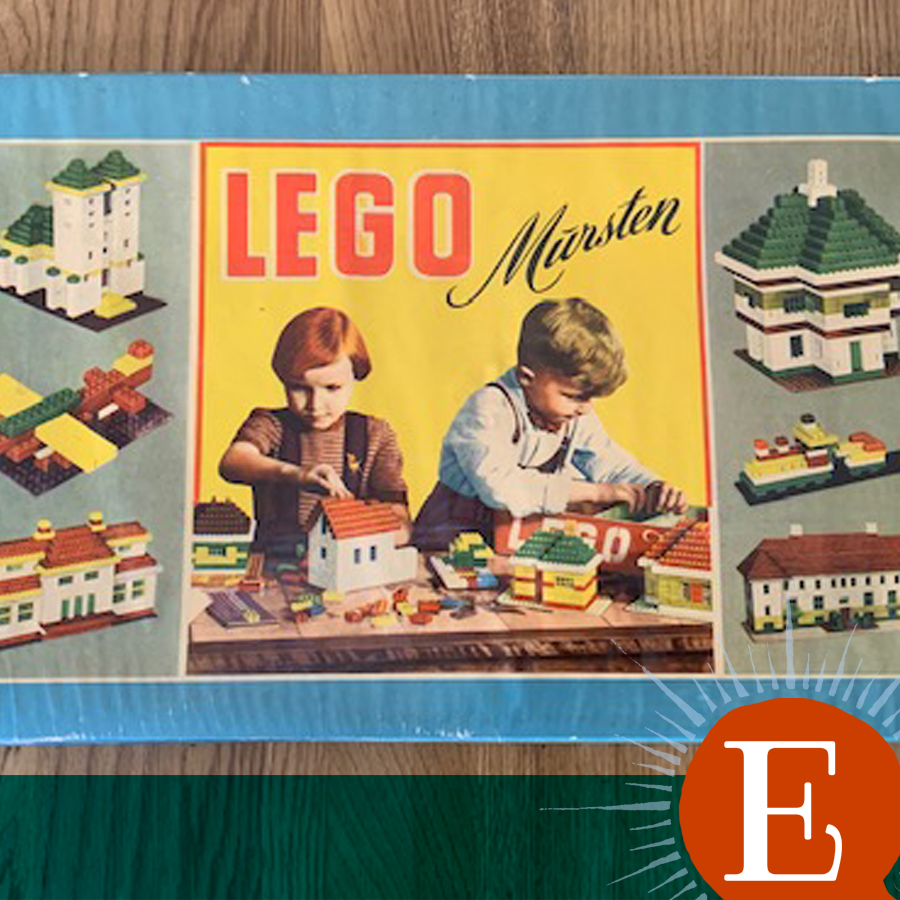
Godtfred also oversees a design improvement that makes the bricks fit together more securely. Under the once-skeptical Godfred’s leadership, the LEGO block becomes what it is today.

Godtfred takes a brick he once hated and turns it into a global phenomenon.
A few weeks ago, I asked one of my sons what his favorite thing is that God has made.
His answer? “LEGOs.”
Adam and Eve have just broken the single prohibition placed on them by God. They have eaten fruit from that one Tree that was off limits. Now, Adam and Eve are hiding among the trees in the garden of Eden when God comes to them, calling out, “…Where art thou?” (Genesis 3:9)
For the first time, humans have experienced sin. Adam and Eve are feeling ashamed, experiencing that broken feeling that accompanies transgressing the law of God. God’s words to them are gentle but firm as He confronts them about their sin.
There is no question that they have broken the clear command of God. So, what are they going to do? How will they respond to this problem being brought to light?
Adam?
“…The woman whom thou gavest to be with me, she gave me of the tree, and I did eat.” (Genesis 3:12)
Eve?
“…The serpent beguiled me, and I did eat.” (Genesis 3:13)
When things go wrong, my first impulse is always the same. My mind rushes to find someone who can bear the blame. Someone, that is, besides me. Somehow, if I can pin the blame on someone else, it feels like I’ve solved the problem.
“Well, that was a failure… but at least it wasn’t my fault.”
Ever since Adam and Eve, generation after generation of humans has responded to sin and failure by pointing fingers.
“It’s not my fault”.
This happens at work. It happens at home. It happens on the sports field. It even happens at church. As easy as it is to operate that way, pinpointing the individual to blame rarely helps anyone. But what is the alternative? What is the right way to react when a problem arises?
Galatians 6 tells mature Christians how to respond when someone is caught in sin. Paul tells the Galatians to “…restore such an one in the spirit of meekness; considering thyself, lest thou also be tempted.” (Galatians 6:1)
The goal is restoration and the necessary attitude is humility. When something goes wrong, a truly wise Christian is most concerned, not to berate and blame, but to restore. Wisdom doesn’t look for a scapegoat. Wisdom looks for a solution.
If you’re as creative as I am, you’ll probably always be able to find a way to blame someone else for every failure. We all need to be humble enough to own up to our own sins and shortfalls, but every problem isn’t your fault. Still, whether you think you’re at fault or not, an obsession with who’s to blame often makes us miss the main point. Fault-finding often leaves us too busy to seek God for a wise way to fix the problem.
Godtfred Kirk Christiansen could have held stubbornly to his anti-plastic position, blaming his father for all the shortcomings of the LEGO company. But the day came when Godtfred stopped pointing the finger and starting working on a solution.
How long will it take us to swallow our pride and do the same?
Primary source: The LEGO Story by Jens Andersen
 Exempla